As we continued with our studies of the chakras this month, making our way from chakra 4, the heart center, through chakra 5, located in the throat, and on toward chakra 6 (the "third eye") and chakra 7 (the "crown chakra"), an old hymn started running through my mind.
I'll get back to that hymn later, but I need, first, to confess that I never knew, until now, that the hands are also associated with chakra 4. I'm not sure why it's taken me twenty years of yoga study to know that while chakra 4, the heart center, is obviously centered near the middle of the chest, the hands (and shoulders and arms) are also considered part of chakra 4. As we moved toward chakra 5, which obviously is associated with voice, I became very confused because, as a writer, my voice is often expressed with my hands.
I do, of course, talk in the normal way, using my vocal chords and mouth, but I almost always have to write something out before I know what my heart is saying to me. And I am often trying to find the right voice for a character, or the right voice to use for an article I'm writing. I rejoiced, like all writers do, when I felt I had found "my voice" as a writer, and the words began to flow easily and without effort. I, therefore, have had a very hard time separating my heart, my hands and my voice. I didn't know whether it was even possible for me to differentiate these two important energy centers.
And then this hymn started playing in my head. Over and over and over. It's a very old Christian hymn, written around 1636 by a German clergyman, Martin Rinckart, just as the plague descended on his town, eventually killing upwards of 8000 people there.
Rinckart obviously wrote the words of this hymn in German, but the best-known English translation goes like this:
Now thank we all our God, with heart and hands and voices,
Who wondrous things hath done, in whom his world rejoices,
Who from our mother's arms hath blessed us on our way
With countless gifts of love, and still is ours today.
I've always associated this hymn with the Mayflower pilgrims since, as children, we often sang it in church or Sunday School around Thanksgiving Day. Although it is clearly a song of thankfulness, I have always picked up on a strain of underlying suffering, which made sense, knowing that the pilgrims had just made it through a very tough year and were facing another harsh winter. Now, knowing the situation that the author himself was in, trying to minister to a flock that was suffering greatly, called on to bury thousands of his parishioners, I now see that there is much, much more to the story behind this hymn.
Despite the somewhat dated language (the use of words like "hath" and the sometimes-jarring reference to God using a male pronoun), I love this hymn, and not just because I've been singing it since childhood. Martin Rinckert's hymn is a hymn of devotion, so by singing it I can practice bhakti yoga, the yoga of devotion.
I also love how Rinckart's hymn reminds me that my act of devotion can be offered up not just with my voice, but also with my heart as well as with my hands. I love the reminder that true thankfulness and gratitude comes by offering our heart and a hand to another, that it is often in the doing for others that we most deeply experience true gratitude. I love the deep lesson of this text that when we are truly thankful, the heart, hands and voice really cannot be separated.
Namate.
Thanksgiving is my favorite holiday. I love that this holiday has resisted commercialization but also that it gently reminds me, every year, to think about all that I have to be thankful for.
Once I get started taking a mental inventory of all that I am grateful for, my list of gratitudes almost seems to write itself: I am grateful for my kids and my husband; my family, friends and neighbors; the blessing of plentiful food; a roof over my head and reliable heat and clean water; and on and on and on. I am truly blessed.
But, if I were ever to get stuck, and forget to think of all I have to be thankful for (and those moments DO come, when I am hurting or resentful or disappointed) I have a handy reference to turn to: my Book of Gratitudes.
This is a photo of my Book. It's actually a photo of "Volume 2," since I filled up "Volume 1" about three years ago. Both books contain short hand-written entries, started in 1997, for a reason I no longer remember. The entries are easy to compose: I simply write down what I feel especially grateful for on the day I feel moved to pick up the book and do so.
I don't write these Gratitudes every day, and sometimes the entries are spaced far apart. They are not always about specific people or things, and sometimes the thing I am most grateful for is quite small. The entry for Dec. 7, 1997 is typical: "I am grateful for the candles on my altar that remind me of the light within so that I can continue to say, 'Not my will, but thine.'"
And, then, there's this one, from Oct. 16, 2000, a few weeks after my youngest child went off to college: "Today is the first day of the 'rest of my life' - a newly empty nest, ready for more wonderful things to grow in it - and, for that, I am very grateful."
My Book of Gratitudes holds plenty of reminders that sometimes even those things that I wish were not true or had not happened, can be the things I am most grateful for. Here is the entry from Sept. 17, 2001, six days after 9/11: "I am grateful to be alive and that my family and friends are all safe. I am grateful for the deep caring exhibited by so many people in the last few days. I am grateful that God is with us."
And, then, there's this entry, written three months after a serious accident in which I nearly severed the index finger from my left hand. Feb. 8, 2006: "I am grateful for the ability to write and to have at least partial use of my hand again. I am grateful for the clarity this injury has provided, and the knowledge that I am, first and foremost, a writer -- and now I will begin to live that way."
I have much to be grateful for, most especially that this "Day for Giving Thanks" comes around every year, to remind me of just how much I have to be thankful for. Happy Thanksgiving!
And Namaste.
Maya Angelou once said, "There is no greater agony than bearing an untold story inside you." And she should know what it is like to not tell one's story. Angelou spent five years of her young life mute, not speaking a word between the ages of eight and thirteen, bearing a heart-wrenching untold story inside herself.
When Angelou was eight years old, she was sexually abused by her stepfather. After she told her brother about it, the man was arrested and briefly jailed, but later was found beaten to death, probably by her uncles. She stopped speaking, and later explained: "I thought I had killed him. I killed that man, because I told his name. And then I thought I would never speak again because my voice would kill anyone."
I know the type of pain she refers to, and it is not just mental or emotional pain. There are things about my life I have chosen not to talk about publicly, and holding these inside of myself has created pain and real, physical illness. People have often said I seem "reserved," but the truth is I fear that speaking my truth might have dangerous consequences. When I look at Angelou's life story, I see that my fears might not be so far-fetched.
So, although I have chosen not to speak, to protect others from my truth, the words have stayed inside my body, causing pain and suffering and illness. Yoga has been the only way I have found to release this pain, but I think Angelou is right. The untold story will continue to create agony, as long as it remains untold.
This week, our yoga teacher training has begun to work with Chakra Four, the heart center. This chakra is primarily involved with relationships and love, both the love we give, but also the love we receive. This is the first chakra that I was physically aware of, and have been able to feel it actually opening and closing as I open and close my heart to people in my life. It is a wonderful thing when my heart is open, but I have lived much of my life with it closed, protecting both myself and others, sometimes from those truths I hold inside, the ones that have caused me pain and agony.
T.K.V. Desikachar in his wonderful book "The Heart of Yoga: Developing a Personal Practice," says that we need only to look to our relationships with other people to see whether we are actually understanding ourselves better. His is a very wise point, very wise indeed...but so very hard to put into practice.
Namaste.
Last week in our yoga in-depth studies class, we began an exploration of the third chakra. This energy center, which is physically located in the belly at the position of the solar plexus, has always seemed rather murky and mysterious to me. I've understood the basic idea behind this chakra--that it's associated with fiery energy as well as with our sense of personal power--but, beyond that, it all seemed rather vague.
This week I think I've finally begun to "get" this chakra, thanks to Anodea Judith's excellent book, "Eastern Body, Western Mind: Psychology and the Chakra System as a Path to the Self." I've had this book for a couple of years and have been re-reading the sections as we've come to them in class, and this week I had one of those "aha!" moments when I came upon this sentence:
"Many people do not awaken this chakra at all, and spend their whole lives following the path of least resistance, giving their power to others, and defining themselves in terms of what is expected."
I suspect a lot of people would not think that a sentence like the above applies to me, but it really hit home and explained why I have found this whole idea of "personal power" to be rather vague. Judith explains that this chakra's function is to take the basic life energy coming up from chakras one and two and turn it into purpose. Here is where we develop a will. Without a functioning or open third chakra, we sometimes look to others for our purpose, thereby never determining what our true purpose might be.
So, it's been a rather tumultuous week as I've tried to come to grips with this idea, all the while feeling the energy surging upward with a great deal of power. It's all been rather confusing, but one thing is clear: I'm a whole lot more in touch with my belly than I have been in a long time. And that has got to be a good thing.
Judith Lasater, in her book "30 Essential Sequences" that I mentioned in my last post, suggests a mantra to go with each of her daily sequences. The mantra for Day Seven of the weekly sequence is "Letting go is not the same thing as giving up."
While I can see the wisdom in this point of view, and would dearly love to be able to let go of some of the old issues that make emotional and psychological peace elusive at times, not to mention those that cause physical pain and health problems, I had to admit that--until last night--the only alternative to letting go that I could truthfully imagine was, in fact, giving up.
Last night in our yoga "In Depth Studies" class, the instructor led us through an exploration of the second chakra, and in so doing, showed me a new way to think about the sometimes scary idea of "letting go." Physically located in the body at a position where the line between the hip points crosses the line between the naval and the pubic bone, this energy center, chakra two, has always seemed to me to be either vaguely threatening, too powerful to pay much attention to, or profoundly confusing.
The second chakra is, indeed, associated with lots of powerful and potentially scary things, not the least of which is our sexuality. Anodea Judith in her excellent book, "Eastern Body, Western Mind," explains that it is also often considered the seat of our emotions, of desire, need and pleasure. Because of all this, I know I am not the only one who has ever felt overwhelmed or especially vulnerable in this area of my body.
Another aspect of the second chakra, though, is that it is adjacent to the area of the body that allows us to move: the hips and the sacroiliac (SI) joints that connect the pelvis to the spine. So, the second chakra is associated with movement in addition to all the other powerful aspects of life that are located there. The flip side of this rather positive aspect of the second chakra is that energy which is not allowed to move freely through this area can get stuck or sent in the wrong direction, causing problems in the SI joints, back or leg pain, hip problems and many other things none of us want.
So, the lesson in last night's class was a very exciting, but very simple, different way to look at the second chakra. Our instructor led us through a simple exercise of carrying out a sun salutation sequence, which all of us had done many times in our yoga classes, but in a new way. She put on music and encouraged us to let our bodies move as if we were inspired by the sequence, but not rigidly bound to the forms.
Within a few seconds I saw what was happening: we were all dancing, everybody doing a slightly different version of sun salutation, but in a way that was truly a dance. I have always been a person who is easily inspired by music and can slip into tapping my foot, swaying and full-out dancing without too much encouragement, but I have to admit that I had never thought of doing my yoga as a dance.
The wisdom of this simple method greeted me this morning when I woke up, the pain in my hip and right SI joint that had been bothering me for days, completely gone. I had been experimenting with stretches in different directions and different ways, but the simplest approach had eluded me: all I really needed to do was let go and let myself move.
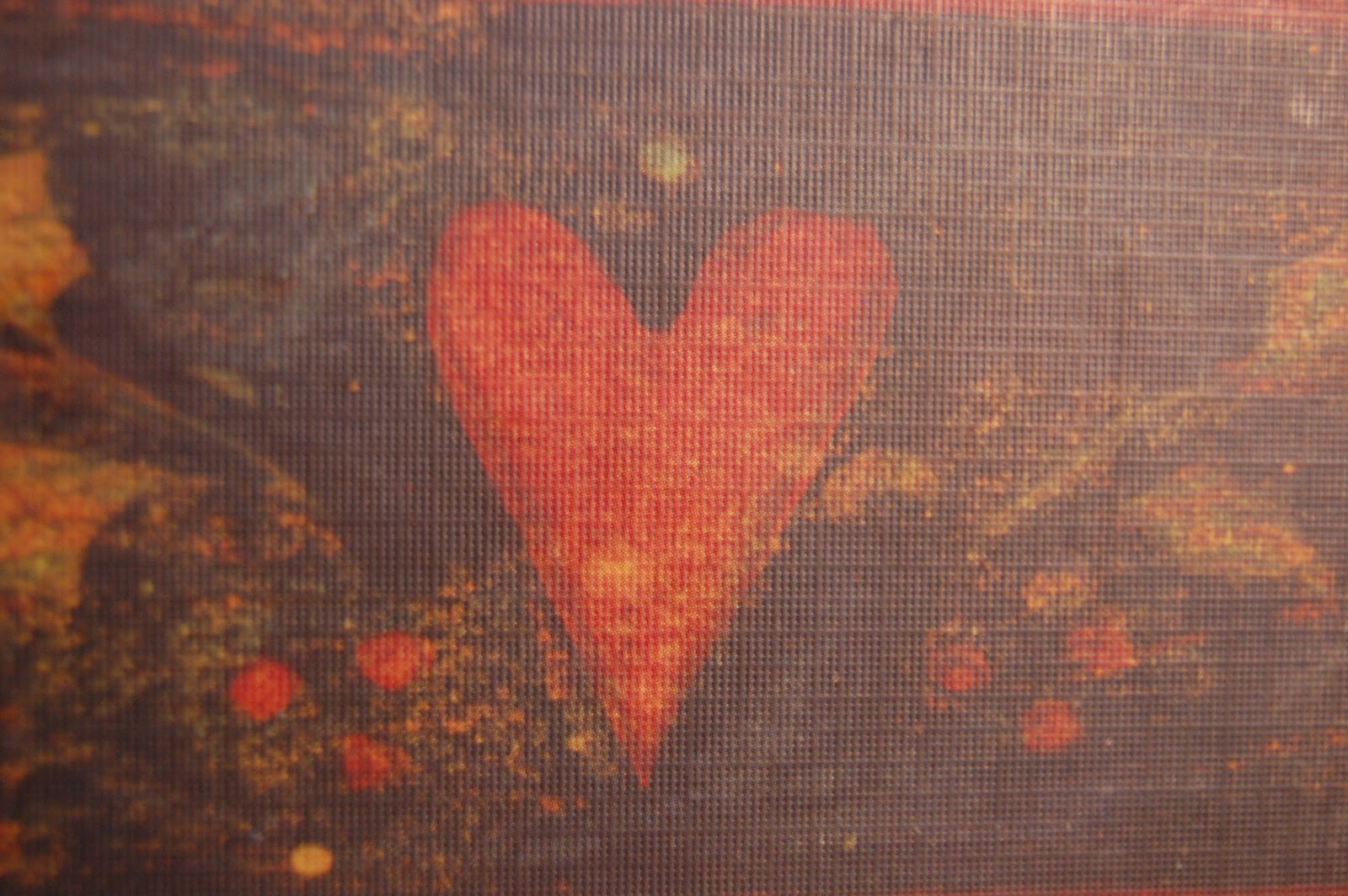
PS: the illustration I've used here is a photo of a painting I made many years ago, on a day when I was especially inspired by music and had learned the wisdom of letting go into movement. The story of how this painting came about will have to wait for another day and another post, though.
In the meantime: Namaste...and remember to dance!
I have had a regular daily yoga practice for about four years. Some time ago, I wrote about my experience with establishing this practice on The Virtual Abbey blog, a team blog about modern monasticism that I contribute to from time to time. Establishing this daily practice changed my life in ways I could never have predicted. One of the most unpredictable of the outcomes of my daily practice has been this new venture in training and study to become a yoga teacher.
 Recently, I decided to make some changes in my daily practice, inspired by Judith Lasater's excellent book, "30 Essential Yoga Poses for Beginning Students and their Teachers." In the back of this particular book, Lasater provides several suggested pose sequences. There are sequences for back pain, fatigue, strength, energy, balance, and so forth. There is even one special (short!) sequence called the "Busy Day Practice."
Last week, I decided to work my way through the "Day-of-the-Week Practice," a set of sequences, one for each of the seven days of the week, and I liked the experience so much, I'm going through the "sequence of sequences" again this week.
My biggest challenge in implementing this sequence of poses has been what might be considered the easiest pose: savasana, or basic relaxation pose, which is required for at least five minutes every day. Until this week, I could count on the fingers of one hand the number of times I did savasana at home during my own practice. After one week, I've more than doubled that number and I'm here to say that this pose is the single best addition to my practice in a very, very long time.
My yoga teachers have been telling me for years that savasana is the most important pose, and I believed them, looking forward to it at the end of each class. But, I could never allow myself to take the time to do this pose at home. Lying on my back on the floor when I needed to get to work or to one of a multitude of chores or any number of other things that awaited me in my busy day always seemed like the last thing I should choose.
But I was wrong, and my teachers were (as usual) right: without savasana I have not allowed the poses I've practiced to sink in and become integrated. I have lost the better part of my daily practice because I have not (until now!) taken those crucial five minutes to let my body and heart wrap itself around the experience without my mind getting in the way.
So, I have learned a valuable lesson this week. Something tells me this is just the first of many lessons that await me on this remarkable journey.
Namaste!
Recently, I decided to make some changes in my daily practice, inspired by Judith Lasater's excellent book, "30 Essential Yoga Poses for Beginning Students and their Teachers." In the back of this particular book, Lasater provides several suggested pose sequences. There are sequences for back pain, fatigue, strength, energy, balance, and so forth. There is even one special (short!) sequence called the "Busy Day Practice."
Last week, I decided to work my way through the "Day-of-the-Week Practice," a set of sequences, one for each of the seven days of the week, and I liked the experience so much, I'm going through the "sequence of sequences" again this week.
My biggest challenge in implementing this sequence of poses has been what might be considered the easiest pose: savasana, or basic relaxation pose, which is required for at least five minutes every day. Until this week, I could count on the fingers of one hand the number of times I did savasana at home during my own practice. After one week, I've more than doubled that number and I'm here to say that this pose is the single best addition to my practice in a very, very long time.
My yoga teachers have been telling me for years that savasana is the most important pose, and I believed them, looking forward to it at the end of each class. But, I could never allow myself to take the time to do this pose at home. Lying on my back on the floor when I needed to get to work or to one of a multitude of chores or any number of other things that awaited me in my busy day always seemed like the last thing I should choose.
But I was wrong, and my teachers were (as usual) right: without savasana I have not allowed the poses I've practiced to sink in and become integrated. I have lost the better part of my daily practice because I have not (until now!) taken those crucial five minutes to let my body and heart wrap itself around the experience without my mind getting in the way.
So, I have learned a valuable lesson this week. Something tells me this is just the first of many lessons that await me on this remarkable journey.
Namaste!
The last three weeks have been a flurry of activity including among other things: (a) an unexpected trip out west for my grandmother's funeral; (b) moving out of my office at work and into my home office; (c) working on revisions of my first book and trying to keep up with the writing schedule for my second book; and (d) two nearly back-to-back three-day yoga teacher training intensives.
Today, I feel like I finally caught up with myself and arrived at the place I most want to be: home. Although I enjoyed being in Idaho, was grateful for the time with my relatives, felt very good about moving on from my job and into the freelancing phase of my career, and totally loved the yoga training, when I finally settled onto my meditation cushion this morning and realized there was nowhere I needed to be today except right there on that cushion, an amazing sense of freedom and joy settled over me.
I lit the candle, like I always do for my meditation, and was struck by the utter beauty of that tiny flickering flame. It was so extraordinarily beautiful, and I wanted nothing more than to sit and gaze at this little fire burning away inside my upstairs room, listening to the soft rain pattering on the window.
Even now, as I think about it, tears come to my eyes, and I realize that what I have been is, "Lonely for myself," as Stephen Cope describes it in his book, Yoga and the Quest for the True Self. It was actually his friend, Paula, who voiced that description of the feeling that she could not shake, a sense of having reached a point in midlife where the career she had once loved, could no longer fill the void she sensed inside.
I distinctly remember when I first encountered that same empty sensation, now over twenty years ago. At the time, it bothered me a great deal that I felt unfulfilled by my life, since I had managed to fill it with the things and people and activities I thought I most wanted: family, a home, work that was interesting and challenging. One of the problems was that I had filled my life with all those things, leaving no time for myself. And leading, inevitably, to the strange sensation of being lonely for myself.
I know I have just completed a very busy few weeks, and one in which my attention was largely focused on others and on external events. I realize the balance has been tipped too far toward extroverted activities for me, an introvert who requires regular doses of solitude. And yet, I think this need for time with our true selves is one that all of us share, introvert and extrovert alike.
This hunger for ourselves is something we all feel from time to time, and there is no cure for it except to spend time with that person who wants us: our own true self. Not that it's easy to dig down through the layers of thoughts, and planning, and list-making and worries that fill our minds. It's not easy to get through these protective internal barriers, and it can take a long time to learn how to let all those thoughts go. Nevertheless, I find that it's worth the effort to return to the cushion, every day, since the only way I have found to fill that emptiness is to spend time with the one that wants to be with me--and is as lonely for me as I am for her.
Namaste.